
Introduction: Why “Linkable Assets” Beat Random Blogging
Most websites publish blogs to rank. Very few publish content to earn links. That’s the difference between a site that stays dependent on ads and a site that builds compounding authority.
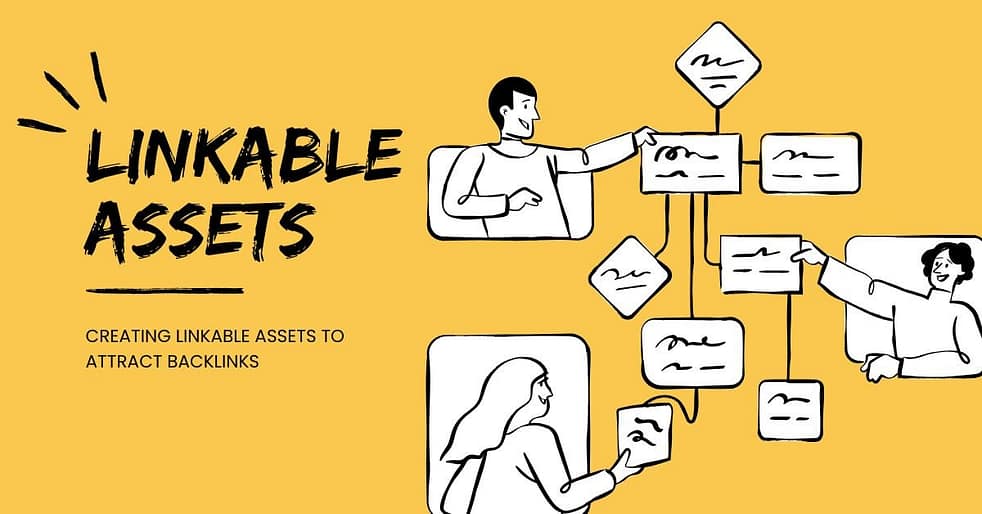
Linkable assets are pages, tools, or resources that people want to reference. They attract backlinks naturally because they make someone else’s job easier: journalists, bloggers, founders, marketers, analysts, students—everyone.
If your site has even 5–10 strong linkable assets, your entire domain becomes easier to rank—blogs, service pages, even new launches.
And yes—AI can help you build linkable assets faster, but only when you combine AI with real structure, methodology, and editorial QA (we’ll cover that too).
Introduction: Why “Linkable Assets” Beat Random Blogging
Most websites publish blogs to rank. Very few publish content to earn links. That’s the difference between a site that stays dependent on ads and a site that builds compounding authority.
Linkable assets are pages, tools, or resources that people want to reference. They attract backlinks naturally because they make someone else’s job easier: journalists, bloggers, founders, marketers, analysts, students—everyone.
If your site has even 5–10 strong linkable assets, your entire domain becomes easier to rank—blogs, service pages, even new launches.
And yes—AI can help you build linkable assets faster, but only when you combine AI with real structure, methodology, and editorial QA (we’ll cover that too).
Quick Self-Test: Is This Asset Link-Worthy?
Before creating anything, validate it using this checklist:
Would someone bookmark this?
Would someone cite this in their blog/report?
Does it save time, reduce risk, or simplify a decision?
Is it better than the top 3 ranking pages?
Does it have a “hook” (data, template, tool, framework)?
If the answer is “no” to most, it’s content—not an asset.
The 6 Most Powerful Types of Linkable Assets
1) Ultimate Guides & Comprehensive Resources
These are pillar-style pages that become “the one guide” people reference.
Examples
The Complete Technical SEO Implementation Guide
SEO Audit Workbook (downloadable)
AEO/GEO readiness playbook
What makes them linkable
Deep coverage + clear structure
Templates + checklists + FAQs
Updated regularly (freshness)
2) Interactive Tools & Calculators
Tools earn links because they deliver instant value.
Examples
SEO ROI calculator
Content refresh prioritiser
Local SEO audit score tool
AI advantage
AI can speed up tool ideation, UX copy, and edge-case logic testing—but the tool must be genuinely useful.
3) Industry Reports & Annual Studies
Original research is the most defensible link magnet.
Examples
“2026 SEO timelines across Indian SMBs”
“AI search impact by industry”
“SEO budget benchmarks”
AI advantage
AI helps with survey design, data cleaning support, summarisation, and turning findings into multiple formats—but credibility comes from methodology.
4) Expert Roundups & Thought Leadership
These work when done like a research project, not a generic roundup.
Examples
“Best technical SEO practices by 25 practitioners”
“How agencies measure AI visibility in 2026”
Best practice
Create a strong question set, publish full methodology, and add your synthesis—not just quotes.
5) Templates, Checklists & Downloadables
These are your easiest link magnets—because they are reusable.
Examples
SEO audit checklist
Content QA SOP
Website redesign SEO-safe migration checklist
“AI Content Ops workflow templates”
Pro tip
Offer 20–40% of the value on-page, and gate the rest as a PDF lead magnet.
6) Case Studies with Measurable Results
People link to proof—especially if the results are presented clearly.
Structure that earns citations
Problem → Constraints → Strategy → Execution → Results → Learnings → Replication checklist
AI advantage
AI can help draft the narrative, but your numbers, context, and proof points must be real (or clearly framed as anonymised patterns).
The Linkable Asset Creation Framework (Repeatable)
Step 1: Choose a “Backlink Angle”
A linkable asset usually fits one of these angles:
Definition/standard (people cite it as a reference)
Decision aid (helps pick tools/vendors/strategy)
Benchmark (gives numbers and comparisons)
Template/SOP (reduces effort)
Tool (reduces time)
Pick ONE primary angle per asset.
Step 2: Build the Asset Outline Like a Product
A linkable asset isn’t written like a blog. It’s designed like a resource.
Include:
Clear TOC (jump links)
Definitions + “who it’s for”
Steps + examples
Templates/checklists
FAQs (for SEO + AEO)
“Last updated” date and refresh plan
Step 3: Add “Citation Triggers”
These are elements that make people link.
High-performing triggers:
A unique framework name (your model)
A checklist people can embed
A table that summarises a complex topic
A downloadable companion PDF
A “how-to” section others can reference
How AI Helps Create Better Linkable Assets (Without Making Them Generic)
AI is a speed multiplier—not a credibility source.
Use AI for:
Structuring outlines and TOCs
Drafting first versions of templates
Creating variants for different audiences (founders vs marketers)
Summarising large documents into actionable formats
Turning a long resource into social and email derivatives
Don’t use AI for:
Fake statistics or fabricated “research”
Unverified claims
Medical/legal/financial assertions without sources
Publishing raw AI text without editorial QA
Promotion Strategy: How Linkable Assets Actually Earn Links
Publishing is not distribution.
7-day launch plan
Day 1: Publish + internal links from related blogs
Day 2: LinkedIn post with 1 insight + link
Day 3: Send to newsletter / WhatsApp groups
Day 4–7: Outreach to 20–50 relevant sites (journalists, bloggers, communities)
Ongoing (monthly)
Update 1 section (freshness)
Add 3 internal links from new posts
Repurpose a snippet as a LinkedIn carousel
Pitch one data point to 5 relevant blogs
Measuring Success (Beyond Vanity Metrics)
Track:
Referring domains earned
Backlinks to the asset
Branded searches uplift
Assisted conversions (people who visit asset → later enquire)
Rankings for “resource” keywords (guide/checklist/template)
Common Mistakes That Kill Linkability
Writing a “guide” that is just opinions
No templates, tables, or reuse assets
No TOC / poor scannability
No refresh plan (assets go stale)
No outreach strategy
Overclaiming results without context
Conclusion: Your Authority Engine in 2026+
If you want Elgorythm to grow as an authority site, your content system should include:
Pillars that earn links
Clusters that support them
AI workflows that scale output without losing quality
Service pages that convert the trust into enquiries
Start with one linkable asset. Then repeat the system.
Frequently Asked Questions
What is a linkable asset in SEO?
A linkable asset is a high-value resource (guide, tool, report, template, or case study) that earns backlinks naturally because people cite it.
What types of linkable assets work best in India?
Templates/checklists, industry benchmarks, practical calculators, and “how-to” resources perform especially well for Indian SMB audiences.
Do linkable assets help service pages rank?
Yes. Backlinks to linkable assets increase domain authority, which makes your money pages easier to rank and improves trust.
Can AI help create linkable assets?
Yes—AI helps structure, draft, and repurpose assets, but credibility requires human QA, methodology, and proof-backed claims.
How long do linkable assets take to start earning backlinks?
Some earn links within days (templates/tools). Research reports often earn links gradually over weeks and months.
Should linkable assets be gated?
Keep most value ungated for ranking and links; gate the “upgrade” (PDF, worksheet, templates) for lead capture.